Can Nokia Become the Next Big AI Stock?
Nokia owns one of the only US photonic chip plants in the world. Is the market still underpricing its AI infrastructure transformation?

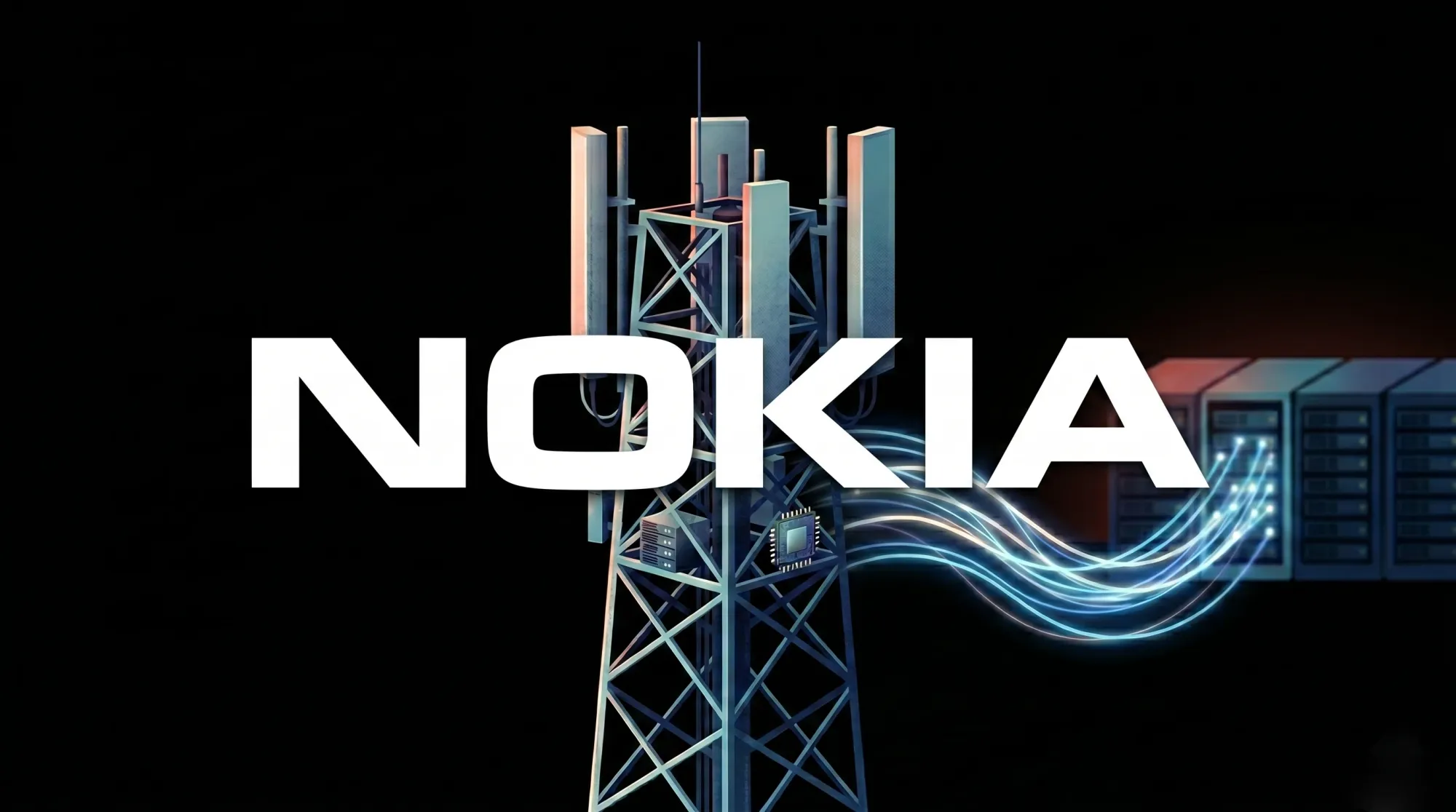
For most of the last two decades, Nokia has been a stock that punished the people who owned it. It sold to slow-moving telecom carriers, fought a brutal price war against Ericsson and Huawei and produced one bullish narrative after another that never lasted. So when a stock like this moves up sharply in a year, the natural reaction is to assume you already missed the move.
The case building beneath the surface argues the opposite. The market is still misreading Nokiaí and the company is quietly turning into a piece of AI infrastructure rather than a fading phone brand. What the original version of this thesis missed, however, is arguably its strongest part: a photonics manufacturing moat that places Nokia inside one of the rarest industrial chokepoints in the Western world. Here is a full breakdown, including the parts investors should treat with genuine caution.
Nokia vs. its closest optical networking competitors
Before digging into the thesis, it helps to see where Nokia sits relative to the companies it now competes with most directly.
| Company | Ticker | Primary role | US optical share | Photonics manufacturing | Mobile drag | Fwd. P/E (approx.) |
|---|---|---|---|---|---|---|
| Nokia | NOK / NOKIA | Optical + mobile systems | ~20% (global) | InP fab + US ATP plant | Yes, significant | 30–37× |
| Ciena | CIEN | Pure-play optical systems | ~50% (US) | None (fabless systems) | None | 35–40× |
| Marvell | MRVL | Custom silicon + CPO | N/A (chip supplier) | Silicon photonics engines | None | 40–50× |
| Coherent | COHR | Lasers, transceivers, SiPho | N/A (component supplier) | InP + SiPho fabs | None | 45–55× |
| Ericsson | ERIC | Mobile infrastructure | Minimal | None | Yes, significant | 18–22× |
Nokia trades at a discount to its optical peers, carries a manufacturing asset none of them own, and is the only name in the table with a credible path to both the optical and mobile parts of the AI infrastructure buildout.
Why the customer changed everything
The core of the bull case is straightforward. You cannot run AI without a network underneath it. A factory robot, a surgical instrument, or a drone cannot wait 200 milliseconds for a distant data center to make a decision, so that computation has to move to the edge of the network. In practice, cell towers increasingly need to behave like small data centers, complete with GPUs and the optical links that connect them back to the core.
Nokia is one of only two Western vendors that can retrofit towers with that kind of hardware. At the same time, AI hyperscaler capital expenditure jumped from roughly 540 billion to 700 billion dollars in just five months. When the buyers shift from cost-constrained carriers to deep-pocketed cloud giants, the entire economics of the business can change.
The photonics moat nobody is talking about
This is the part of the Nokia story that has received almost no attention from mainstream analysts, yet it may be its most durable competitive advantage.
The 2.3 billion dollar acquisition of Infinera, completed in February 2025, handed Nokia something extraordinary: an indium phosphide photonic integrated circuit fabrication facility in Sunnyvale, California. InP is the material that lets chips generate light directly from electricity. Silicon, which runs everything else in computing, cannot do this. That makes InP fabrication capacity strategically irreplaceable, and Nokia now owns one of the only such fabs in the United States.
The second asset is even less discussed. Less than 2% of global advanced semiconductor packaging takes place on US soil. Nokia's facility in Allentown, Pennsylvania, is one of the only sites in the country performing advanced test and packaging of photonic chips into optical modules for AI and telecom infrastructure. The workforce there is being doubled to more than 500 people, with new capacity coming online in Q3 2026.
These two facilities sit inside Nokia's broader 4 billion dollar US manufacturing commitment, comprising approximately 3.5 billion in R&D and 500 million in capital expenditure across Texas, New Jersey, and Pennsylvania. The timing is precise: the entire data center industry is shifting from copper interconnects to optical, co-packaged optics are beginning to move from lab to production, and Nokia holds manufacturing assets that would take competitors years to replicate.
At OFC 2026, Nokia unveiled its next-generation coherent optical product roadmap: a modular building-block approach using four new DSPs and multiple optical front ends in both InP and silicon photonics. The company claims up to 70% total cost of ownership improvement across coherent transport use cases. Products sample in mid-2027 and reach general availability in H2 2027. That timeline is a risk, which the bear case section addresses, but the product architecture itself is among the most vertically integrated in the industry.
Two businesses inside one ticker
Nokia is best understood as two businesses running in parallel. The larger one is mobile infrastructure, the legacy unit generating around 11.4 billion dollars in revenue. It is slow and stable, and it funds everything else.
The second business is the one the market may still be underpricing. Nokia's network infrastructure division did approximately 7.6 billion dollars in 2025, up 22%, powered by the Infinera acquisition. Optical Networks sales grew 20% in Q1 2026 alone. AI and cloud customer revenue grew 49% year over year to roughly 360 million euros in Q1, representing 8% of group sales. Management raised Network Infrastructure 2026 growth guidance to 12–14%, with Optical and IP Networks guided at 18–20%.
A sum-of-the-parts valuation, applying different multiples to each segment based on the closest comparable company, produces a base case around 16 dollars per share, a bull case near 21 dollars, and a higher scenario near 25 dollars if the optical mix grows as fast as management projects. At a current price of approximately 12.18 euros, that range implies substantial upside even in the base case, before the photonics manufacturing angle is fully reflected in the model.
New leadership and meaningful insider buying
In April 2024, Nokia replaced its longtime chief executive with Justin Hotard, who previously ran Intel's data center business and spent time at HPE. Hotard bought close to a million dollars of Nokia stock with his own money after the stock reached a record high, a meaningful signal of personal conviction.
Insider buying has not stopped there. In May 2026, Nokia's Chief of Staff to the CEO, Victoria Hanrahan, purchased 44,682 shares across two transactions at a volume-weighted average of approximately 15.81 dollars, representing a personal outlay of around 706,000 dollars. Senior manager Konstanty Owczarek purchased 37,405 shares in the same window at an average of 15.99 dollars. David Heard, President of Network Infrastructure, and several other senior managers made additional open-market purchases on May 15.
These are not token grants or compensation awards. They are discretionary open-market purchases at prices above current levels, from people with full visibility into the forward pipeline. Insider buying at elevated prices does not guarantee a positive outcome, but it does represent a form of conviction that is worth registering alongside the financial case.
The Nvidia and Anduril angle
The most attention-grabbing development remains the Nvidia relationship. In October 2025, Nvidia made a roughly 1 billion dollar equity investment for approximately 2.9% of Nokia, tied to a joint product called AI RAN. The pitch is to turn a single-purpose tower into something closer to a multilane highway: one lane handling voice and data, another handling AI inference at the edge. Nvidia Blackwell GPUs sit directly inside Nokia base stations, with a claimed 30% total cost advantage versus running AI and radio infrastructure separately. T-Mobile is the first American carrier to pilot the technology, with Vodafone and SoftBank reportedly next.
Defense is the second growth layer. Anduril's sentry tower uses Nokia's 5G stack, and Nokia's mission-critical enterprise and defense segment grew 19% year over year in Q1 2026. With elevated defense spending across NATO member states and the United States, this provides a layer of optionality sitting on top of the AI networking case that most valuation models do not yet price in.
The western duopoly that Huawei built
One structural tailwind rarely mentioned in Nokia coverage deserves explicit attention. Huawei holds approximately 29–31% of global optical networking market share, making it the largest single vendor in the world. It is excluded from procurement in the United States, most of Europe, Australia, Japan, and a growing list of additional markets on security grounds.
That exclusion leaves Nokia and Ciena as the dominant western suppliers across the markets that matter most. As hyperscaler spending climbs and optical infrastructure investment accelerates, the addressable market for both companies expands while the competitive field in Western procurement remains structurally limited. Nokia management models the AI and cloud addressable market at a 27% compound annual growth rate through 2028.
The risks you should not ignore
No honest analysis stops at the bull case. Four risks deserve serious weight.
The first is Ciena's incumbency. Ciena holds approximately 50% of the US optical market, its WaveLogic 6 Extreme is widely deployed today, and it has a $7 billion record backlog with 27% revenue growth guided for fiscal 2026. Nokia's differentiated photonics product suite does not reach general availability until H2 2027. That is an 18-month window during which Ciena continues to ship, take orders, and deepen customer relationships. Ciena's leadership has publicly stated that the company competed effectively against Nokia and Infinera as standalone entities and continues to do so as a combined one.
The second is mobile drag. Nokia is not a pure optical play. The 5G capex cycle is in a trough, Fixed Networks revenue fell 13% due to strategic portfolio shifts, and the mobile infrastructure segment faces flat-to-declining revenue for the foreseeable future. The restructuring creates near-term revenue holes that optical growth must fill faster than expected to sustain current momentum.
The third is execution risk on the Infinera integration. Large optical acquisitions have a history of going sideways. Ericsson gained mobile share from Nokia following the Alcatel-Lucent deal. The new coherent optical product suite is architecturally ambitious, but ambition and on-time delivery are different things.
The fourth is Open RAN commoditization, the industry push to open up closed interfaces that currently lock carriers into a single vendor. If that effort succeeds at scale, value could migrate away from integrated hardware vendors toward software running on commodity gear, which would pressure Nokia's mobile margins even as its optical business grows.
So is it the next big AI stock?
The argument for Nokia rests on something more than a single catalyst. Four things changed at roughly the same time: the customer shifted from carriers to hyperscalers, the optical product became vertically integrated through the Infinera acquisition, new leadership arrived with a genuine AI data center background, and the macro backdrop moved sharply in Nokia's favor as hyperscaler spending climbed and Western governments began treating photonics manufacturing capacity as a strategic asset.
The photonics manufacturing layer adds a fifth change that most analysis has not yet absorbed. Nokia is one of the only Western companies with a coherent optical product roadmap, an InP fabrication facility, and an advanced semiconductor packaging plant on US soil, at precisely the moment the industry shifts from copper to light and governments are willing to subsidize that transition. That combination is not easily replicated, and it is not yet reflected in a forward multiple of 30–37 times earnings.
At 12.18 euros today, Nokia trades well below the price levels at which its own senior managers were buying in May. Whether that represents a second-entry opportunity or a sign that the market has reassessed the near-term execution risks is the honest open question. The structural pieces are real. The next twelve months of execution, particularly the Nvidia milestone and the optical product ramp, will determine whether they translate into durable shareholder value.
This article is for informational purposes only and is not financial advice. Always do your own research before making investment decisions.
Frequently asked questions
What makes Nokia different from Ciena in optical networking?
Ciena is a pure-play optical systems vendor with no mobile exposure and approximately 50% of the US optical market. Nokia is more complex: it owns end-to-end manufacturing capability including an indium phosphide fabrication facility and a rare US advanced packaging plant, which Ciena does not. Nokia also carries mobile infrastructure revenue that Ciena does not, which creates both a drag and a diversification argument depending on how 6G and private wireless develop.
What is the Nokia photonics manufacturing moat?
Through the Infinera acquisition, Nokia controls an InP photonic chip fab in Sunnyvale, California, and an advanced test and packaging facility in Allentown, Pennsylvania. Less than 2% of global advanced semiconductor packaging happens in the United States. Nokia's Allentown site is one of the only facilities in the country performing this work on photonic chips, placing it inside a genuinely rare industrial chokepoint at a moment of significant policy tailwind.
What is Nokia's current stock price and valuation?
As of 26 June 2026, Nokia trades at approximately 12.18 euros on Nasdaq Helsinki. On a forward earnings basis, the stock trades at roughly 30–37 times, which represents a discount to pure-play optical peers such as Ciena and Coherent. A sum-of-the-parts model applying segment-appropriate multiples produces a base case around 16 dollars per share, with a bull case near 21 dollars.
Have Nokia insiders been buying shares?
Yes. In May 2026, Nokia's Chief of Staff to the CEO purchased approximately 706,000 dollars worth of shares in the open market. A second senior manager purchased 37,405 shares in the same window at approximately 15.99 dollars. Nokia's President of Network Infrastructure and several other senior managers made additional purchases on May 15. All transactions were disclosed under EU Market Abuse Regulation reporting requirements.
What are the biggest risks to the Nokia investment thesis?
The four main risks are: Ciena's established incumbency in optical networking and its 18-month head start over Nokia's next-generation product suite; the mobile infrastructure drag from a 5G capex cycle trough; execution risk on the Infinera integration, since large optical acquisitions have historically been difficult; and the longer-term threat from Open RAN commoditization, which could shift value away from integrated hardware vendors toward software.
This article is for informational purposes only and is not financial advice. Always do your own research before investing.